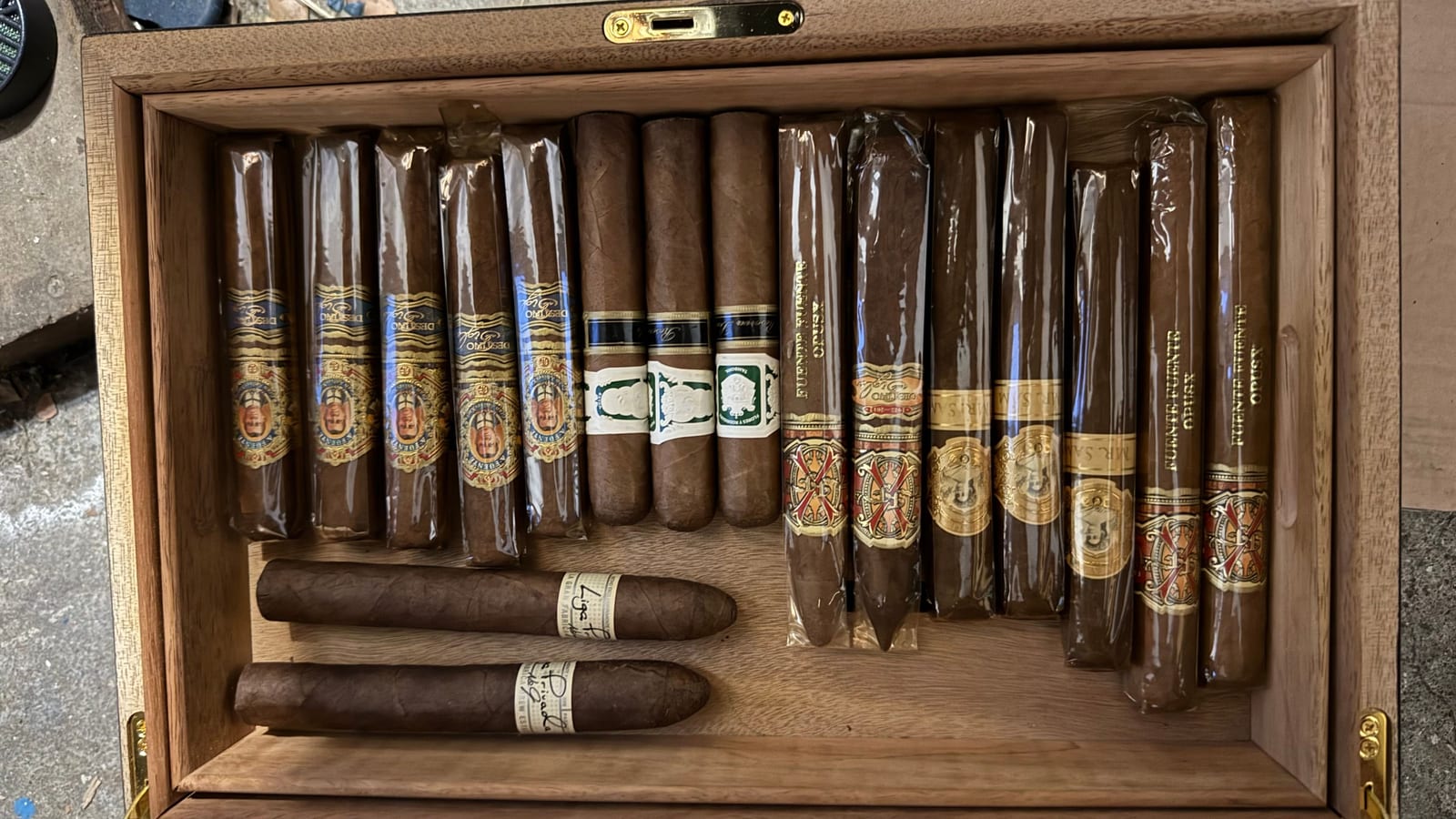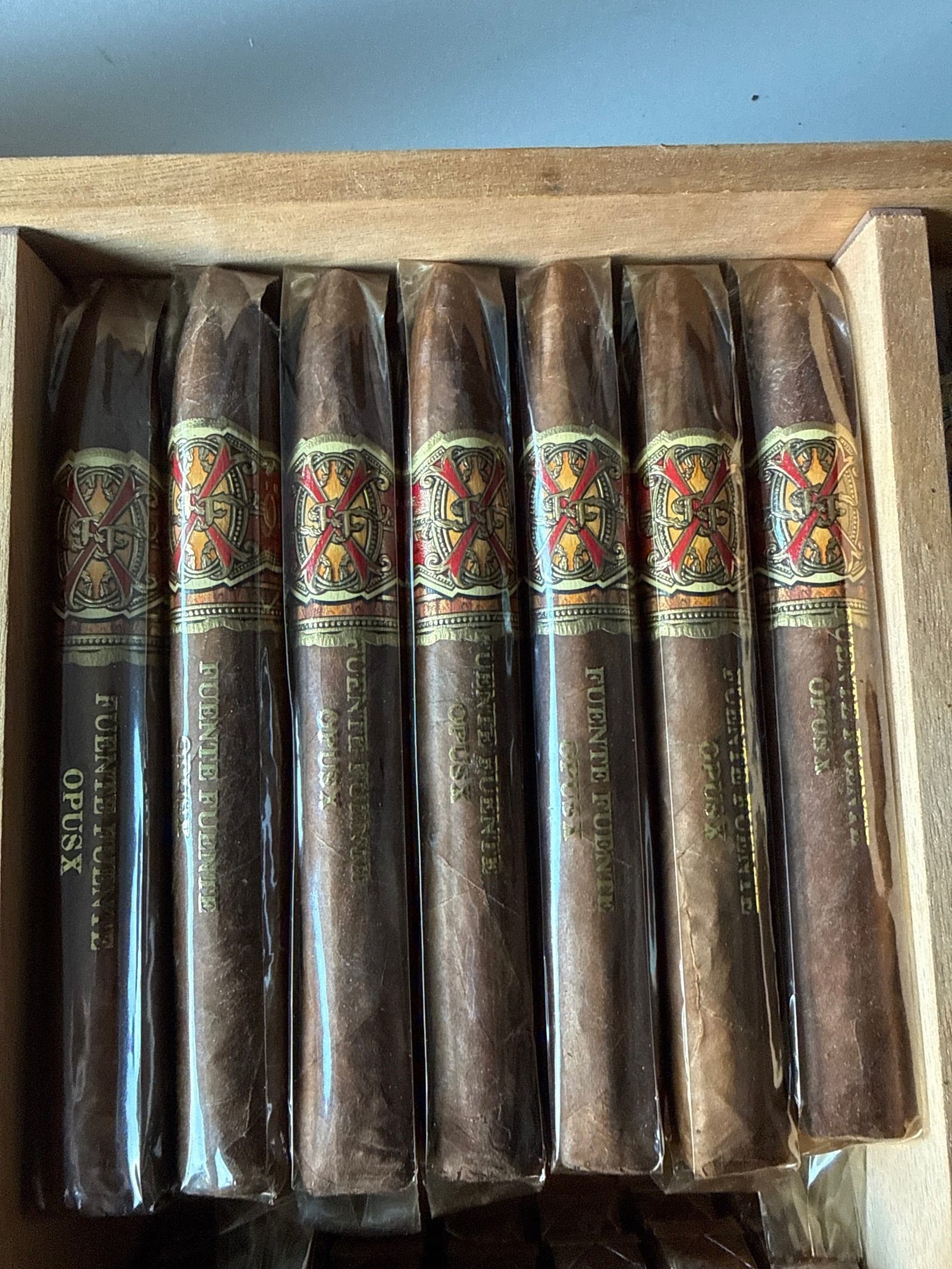
There is a moment in every good tobacconist’s day when a stranger walks in, leans on the counter as though sharing a secret, and asks whether there are any Opus X out back. The answer, delivered with the patience of a man who has heard it ten thousand times, is almost always the same: not for you, not today. And so the legend renews itself. The Fuente Fuente Opus X has become the cigar that people want precisely because they cannot have it, which is a different appetite altogether from wanting to smoke it. Understanding the gap between those two desires is the whole of the matter, and it is a gap that widens every year the release stays scarce.
The facts are not in dispute. The Opus X is a genuinely fine cigar, a Dominican puro grown under shade by a family that knew what it was doing long before the world decided this particular blend was the one to covet. The wrapper is the point of pride: a Dominican-grown leaf raised where conventional wisdom said the country could not produce a wrapper worth the name, which is part of why the cigar carried weight from the start. It is rich, it is built with care, and on a good evening it rewards attention. None of that is the problem. The problem is everything that has grown around it: the waiting lists, the shops that keep a few back for their best accounts, the secondary sellers asking three and four times retail to anyone foolish enough to pay it. The cigar and the circus arrived together, and most buyers can no longer tell you where one ends and the other begins.
The mechanics of the chase
Allocation is not a conspiracy. It is arithmetic. A maker produces a finite number of a thing, demand outruns supply, and the people who control the inventory ration it. Shade-grown wrapper takes years to bring to the point of rolling, and a house that has staked its name on consistency will not flood the market to meet a spike in appetite; it would rather disappoint you this season than sell you something it is not proud of. So the supply stays tight by design as much as by nature. What follows is human nature doing what it always does with a closed door. The cigar that you could once buy by the box becomes a favour, then a trophy, then a unit of currency among men who measure their standing by what they were allowed to acquire.
Notice how the rationing changes the buyer before it changes the price. Once a shop keeps a few back for its best accounts, every purchase you make there becomes an audition. You buy the daily cigars partly to smoke and partly to earn your place on a list, and the list, not the leaf, starts to organise your spending. This is the quiet cost of allocation that nobody prints on a band: it turns an ordinary pleasure into a standing you have to maintain, and standing, once you have it, is hard to walk away from.
The grey market is the inevitable second act. Boxes that should be resting in a humidor end up flipped at a markup, often by people who have never lit one and never intend to. You are no longer buying tobacco at that point. You are buying a story about how hard the tobacco was to get, and paying a premium for the privilege of repeating it. Worse, you are buying blind. A cigar bought on the secondary market has passed through hands you cannot see and storage you cannot vouch for; it may have sat in a hot car boot for a week or a warehouse with no humidity control for a year. You pay the chase price and inherit somebody else’s negligence, with no counter to return it to and no relationship to make it right.
Here is the line that ought to hang in every collector’s study. The leaf does not know it is rare. It does not burn any cooler for having been fought over. When you sit with a cigar in the quiet of an evening, the chase falls away entirely, and you are left with what is actually in your hand: construction, balance, the way the ash holds, the finish. Judge that. Judge nothing else. The premium you paid does not enter the flavour; it only enters your memory of the transaction, and memory of a transaction is a poor thing to smoke.
What discipline looks like
The disciplined collector does a few unglamorous things. He builds a real relationship with a tobacconist, the slow way, over years and ordinary purchases rather than a single grand request. He learns the names of the people behind the counter and buys from them in lean months as well as fat ones, so that when an allocation is decided he is a known quantity rather than a stranger with a request. He takes his allocation when it comes and is gracious about its size. He does not telephone in a panic when he hears a release has landed elsewhere, and he certainly does not overpay the secondary market to soothe the feeling that he is missing something. The feeling passes. The dent in your judgement does not.
Buy to smoke. This is the first principle and it resolves almost every dilemma that follows. If a box is destined for your humidor and then your evenings, the question of what it might fetch becomes irrelevant, and the whole apparatus of resale and bragging rights simply stops applying to you. You are a man who enjoys cigars, not a man who trades them, and the difference shows in how you carry yourself at the counter. The trader is always slightly anxious, always calculating whether he bought well; the smoker is not, because his return is the evening itself and it is paid in full the moment he lights up.
There is a second discipline that gets less attention, which is patience with your own humidor. The man who buys to smoke can afford to wait, because he is not watching a market; he is watching a calendar. He puts the box down, notes the date, and lets it rest while the chase carries on without him. By the time he opens it, the cigars are better than the ones the flippers sold on the week they landed, and he has paid a fraction of what they charged. Patience is the one advantage available to any buyer at any budget, and it is the advantage the panicked collector throws away first.
It is worth saying plainly that the Opus X earns much of its standing. The cult around it is a separate creation, grafted on by the market and by the kind of buyer who confuses difficulty with quality. Hold both thoughts at once: respect the cigar, ignore the circus. The respect costs you nothing. The circus costs you a great deal, in money and in composure.
Reading the cigar on its own terms
When your allocation arrives, give it time. Six months in a stable humidor, around 65 to 68 per cent relative humidity, is a reasonable minimum. A full-bodied cigar rolled with young leaf can carry an ammoniac edge that only rest will settle, and rushing it is the surest way to conclude that a fine cigar is merely a loud one. Then, when you light one, work through these in order.
- Construction first: the draw should be open but with resistance. A plugged Opus X is a storage or rolling failure, not a collector’s prize. Roll it between finger and thumb before you cut; a firm cigar with no soft spots or hard knots is telling you the bunch was built with care.
- The first third tells you the tobacco. Opus X runs rich and full; if it reads thin or sharp, suspect a dry specimen or a weak year in the wrapper. This is where a rushed cigar confesses itself, in a harshness that has nothing to do with strength and everything to do with age.
- Watch the ash: firm and even formation suggests consistent leaf density. An uneven burn points to inconsistent bunching; correct it with a gentle touch-up and make a note against the box. One canoeing cigar is bad luck; three from the same box is a pattern, and the pattern is worth recording.
- The finish is the discriminator. A well-aged example extends across the palate. A young or improperly rested one closes quickly and leaves bitterness. Sit with the last third rather than the first; the chase buyer never gets that far, because he is already reaching for his telephone to report what he has.
None of these criteria require the box to be difficult to find. They apply equally to every fine cigar in your humidor, which is rather the point. The test is portable. Run it on a chased box and a quiet one from the same shelf, blind if you can manage it, and you will learn more about your own palate in an evening than a year of waiting lists could teach you.
Strip away the waiting list and the markup and you are left with the only test that has ever mattered, which is whether the thing is good in your hand on a Tuesday with nobody watching. Some allocated cigars pass that test handsomely. Many do not, and survive purely on the momentum of their own scarcity. The collector worth the name keeps the two categories separate in his mind and refuses to let the second masquerade as the first. He also accepts the harder truth that some of his own trophies will fail the test, and he is willing to smoke through the box and admit it rather than keep the legend intact on the shelf.
The most chased box in the room is rarely the best smoke in it, and the man who knows that has already won the only contest worth entering. He is not the one at the counter asking what is out back; he is the one at home, six months later, opening a box he set down and forgot to be anxious about. Take your allocation. Light it slowly. Let everyone else do the panicking.