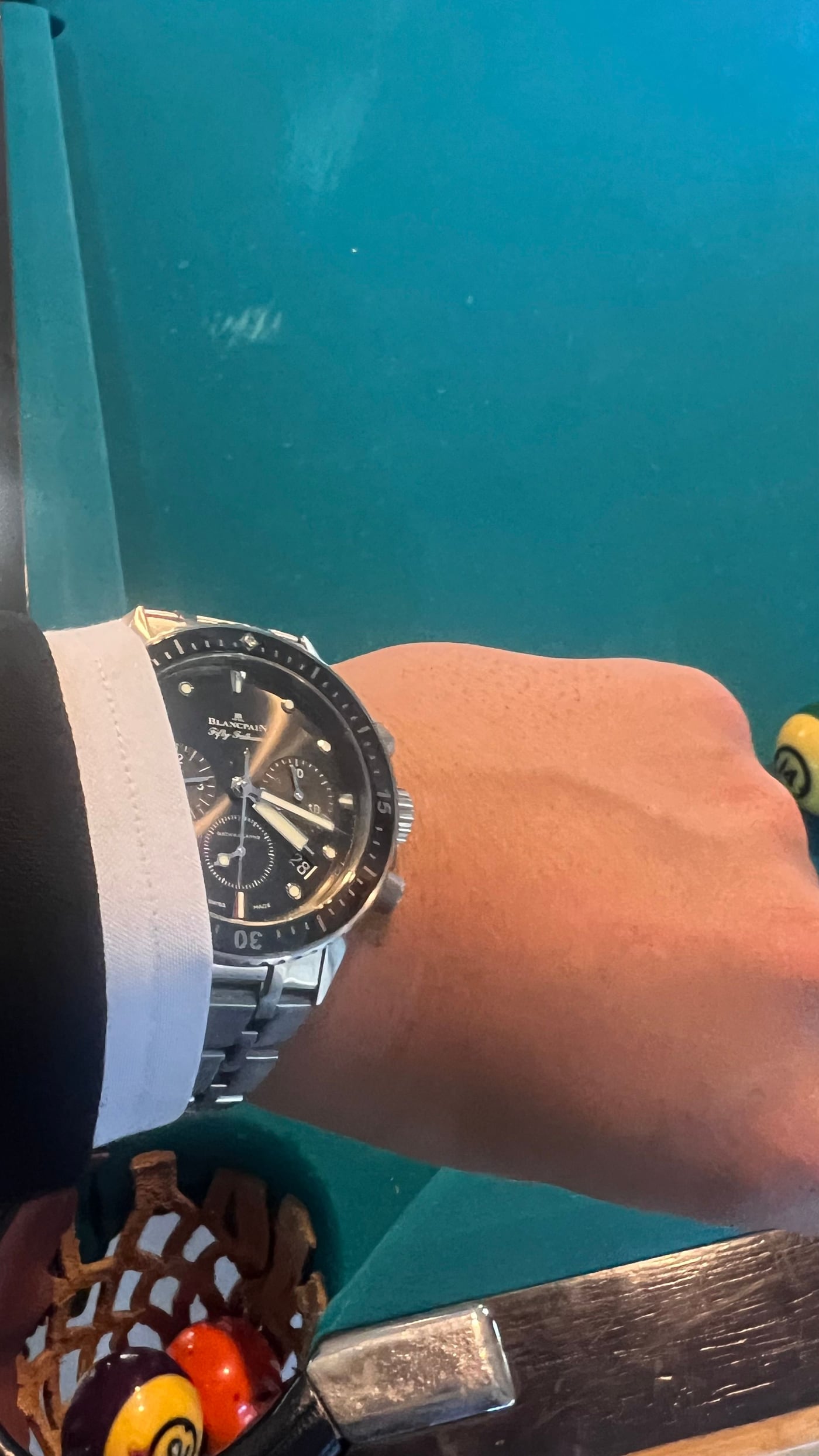
The loudest watch in the room is rarely the most interesting one. It is usually the most heavily sold: the most marketing per millimetre, the most borrowed glamour, the most anxiety about being noticed. Real horological taste tends to whisper. It shows up as a thin case you only appreciate on the wrist, a dial that rewards a second look, a movement finished where no one will ever see it. The signal is deliberately hard to read from across a room, which is the point. A watch built to be recognised at social distance is built for the crowd. A watch built to reward the person wearing it is built for one.
Understatement is not modesty for its own sake. It is a wager that substance will outlast attention. The collector who buys quietly is betting that craft holds its value when the hype that sold the loud watch has moved on to the next loud watch. That bet usually pays, and it pays twice: once in the object itself, which keeps giving up detail for years, and once in the market, where a maker’s quiet references tend to hold their footing while the season’s trophy softens the moment a new trophy is announced. The loud watch is a position in a fashion cycle. The quiet one is a position in a craft that does not date on the same clock.
Complication is not the same as competence
A complication is a function beyond telling the time: a calendar, a chronograph, a repeater. The word has been worn smooth by marketing, which sells complication as achievement regardless of how it was made. But a complication assembled from a bought-in module and dressed in a famous name is not the same object as one designed, made, and finished under one roof. They can cost the same. They are not the same. A chronograph built on a supplied module and one built on an integrated column-wheel calibre may read identically on the dial and feel entirely different under the finger: the pusher action, the reset, the way the seconds hand snaps back to zero without a shiver all come from decisions made deep in the movement, not from the case or the name on the dial.
This is what people mean, or should mean, by in-house. Not the slogan, which has been abused, but the reality: a maker who controls the hard parts, the escapement and the finishing and the assembly, and can therefore answer for them in twenty years. Consider the perpetual calendar, the complication that most rewards this control. It tracks the irregular lengths of months and the leap year, and it must do so through decades of wear, service, and battery-free memory of the date. A house that engineered its own perpetual mechanism can adjust it, correct it, and rebuild it. A house that outsourced the mechanism can only send it away and hope the supplier still exists. The quiet complication is quiet partly because the maker has nothing to prove and partly because the people who buy it have stopped needing the watch to do their talking.
How to tell the difference
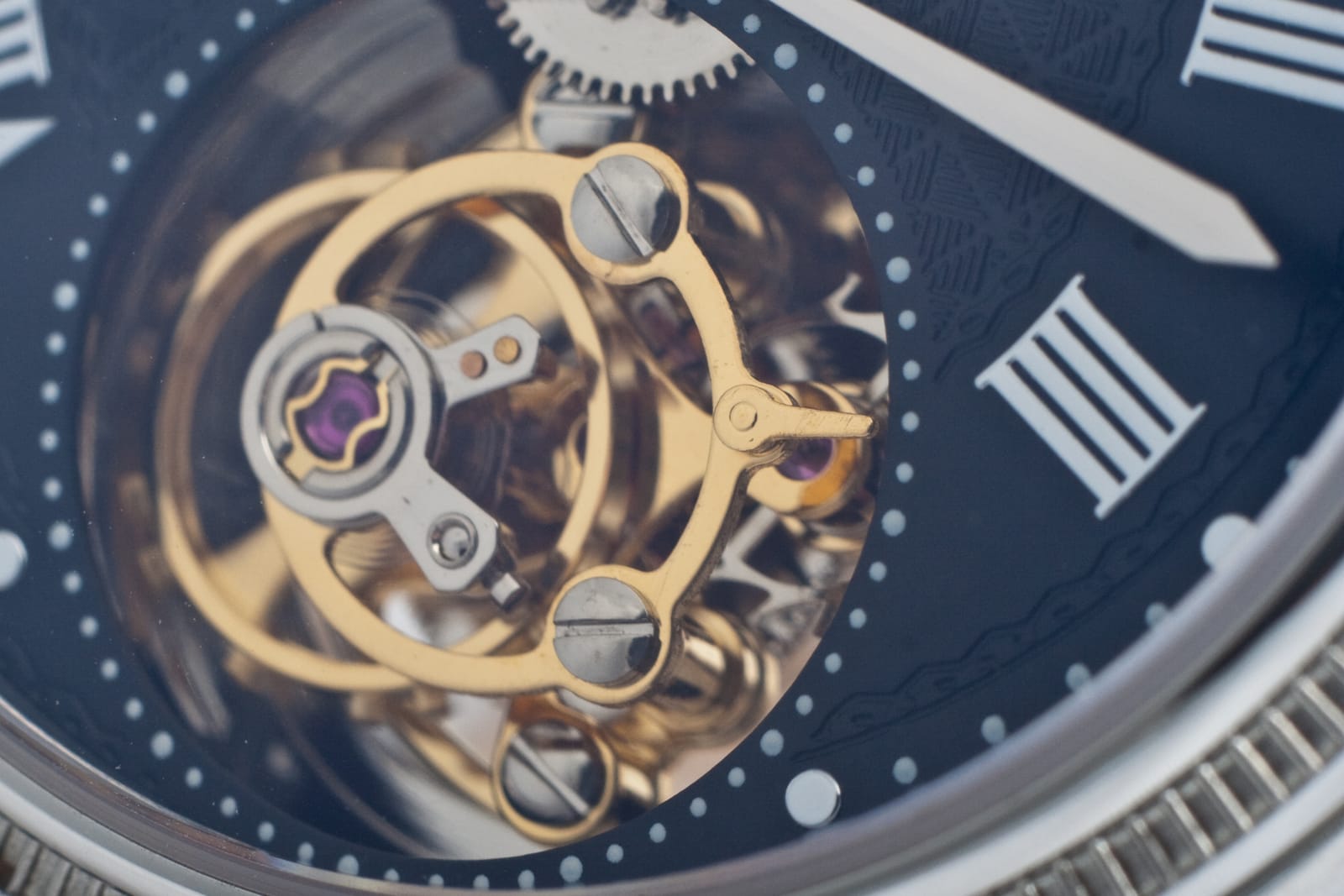
Turn the watch over. A display back is an invitation to judge, and most loud watches decline it. Look at the bridges, the bevels where two planes of metal meet, the heads of the screws. Hand finishing catches light unevenly because it was done by a hand. Machine finishing is flawless in the way that tells you no one lingered. The tells are specific and learnable. Anglage, the polished chamfer along the edge of a bridge, should carry a soft, slightly living line and should turn cleanly through inside angles, the sharp interior corners a machine cannot cut and a person has to file by hand. Screw heads should be polished flat with clean, undamaged slots, and their flanks should be bevelled rather than left raw. These are hours of work that no photograph sells and no advertisement mentions, which is exactly why they survive as honest signals.
Then ask the unfashionable question: who actually made the movement, and who will service it. A watch is a relationship that outlives the transaction. The maker who can repair its own work decades on is selling something the module-and-logo model cannot. Servicing is where the two models finally separate. A complication built in-house can, in principle, be opened, understood, and restored by the house that drew it, even long after the reference is discontinued. A complication built on a supplied module is only as serviceable as that supplier’s willingness to keep making parts, and suppliers rationalise their catalogues without sentiment. The collector who ignores this is buying a watch with a hidden expiry date and no way to read it.
What to verify before committing
When a watch is presented as in-house, treat that as a claim requiring evidence, not a settled fact. Four checks that take under ten minutes.
- Movement origin. Ask who calibrates the base movement and whether the maker holds the technical documentation. A genuine in-house calibre comes with a clear answer, usually a specific one: the calibre’s reference, its history, the family it belongs to. Evasion or a redirect to marketing copy is itself informative.
- Finishing legibility. Under a loupe, anglage on bridges should show slight variation consistent with hand work, and inside angles should be crisp rather than rounded. Perfectly uniform bevels across every edge suggest machine finishing dressed to look handmade.
- Service commitment. Ask the retailer, in writing, whether the maker guarantees parts availability in twenty years, and where the servicing is actually performed. This separates houses with manufacturing depth from those with catalogue breadth.
- Caseback coherence. Finishing visible through a display back should match the dial side. Rougher bridges, stamped rather than polished edges, or unpolished recesses indicate that presentation work was applied selectively, for the camera rather than the movement.
None of these checks require expertise. They require the willingness to ask directly and to look, and the composure not to be hurried past the answer by a room designed to hurry you.
What the market rewards, and when
None of this is an argument against value or against the loud watch as a pleasure. It is an argument about time horizons. Over a season, attention rewards noise, and the watch everyone is talking about is the one everyone wants. Over a decade, the reward shifts to the qualities that noise cannot fake: the integrity of the calibre, the depth of the finishing, the maker’s ability to stand behind the object long after the launch. The collector who buys for the room is competing in a market that resets every season. The collector who buys for the craft is buying out of that competition entirely, which is why the quiet references so often look underpriced at purchase and fairly priced in hindsight.
The taste that lasts
There is a stage every collector passes through where the point is to be seen wearing the right thing. It is a normal stage and an expensive one. What comes after, for those who keep going, is the pleasure of owning something that satisfies you when no one is looking, on a Tuesday, alone.
That is the quiet complication. Not the watch that announces your judgement to strangers, but the one that confirms it to yourself. The room will admire the loud watch and forget it by dinner. The quiet one you will still be turning over, ten years on, finding something new in the finishing each time. Taste, in the end, is just patience with better manners.